Does UV-C Light Kill Germs? How UV-C Works in Your Home
Short answer: yes, UV-C light can kill or inactivate germs like bacteria, viruses and mold, and hospitals have used it for decades. But it only works on what it can "see," and it needs enough intensity and time. Distance, shadows, dust and run time all matter, which is why how you use a UV-C device counts as much as the device itself.
What is UV-C light?
Ultraviolet light sits just beyond the violet end of the light we can see. It comes in three bands: UV-A and UV-B (the kinds in sunlight that tan and burn skin) and UV-C, the shortest wavelengths, roughly 200–280 nanometers. UV-C is the band used for disinfection, which is why it's often called "germicidal" UV. Most germicidal lamps, including the quartz tubes in the UVILIZER Tower, give off their peak light around 254 nm.
How does UV-C kill germs?
UV-C damages the genetic material (DNA or RNA) inside bacteria, viruses and mold. Once that happens, they can't reproduce, so they can't grow or spread. The CDC describes germicidal UV as a way to inactivate viral, bacterial and fungal organisms, and notes that it's used in homes, schools, offices and hospitals.
What decides whether UV-C works
- Dose. Dose is light intensity multiplied by time. A weak lamp needs much longer to deliver the same dose as a strong one, and the FDA has noted that many UV-C gadgets sold for home use are low-dose.
- Distance. UV-C gets weaker the farther it travels, so surfaces close to the lamp get a bigger dose than surfaces across the room.
- Line of sight. UV-C works on surfaces it shines on directly. Germs under furniture, in deep fabric folds or behind objects are in the shadows.
- Dust and grime. Dirt, dust and residue can shield germs from the light, so UV-C works best on surfaces that have already been cleaned.
- The germ itself. Some organisms are easier to inactivate than others. Many viruses and bacteria respond quickly, while hardy mold and bacterial spores need much more exposure. The EPA also points out that dead mold spores can still trigger allergies, so cleaning up mold you can see still matters.
Does UV-C kill viruses, bacteria and mold?
UV-C is a well-established way to inactivate bacteria and many viruses on exposed surfaces and in the air, and professionally designed UV systems are used to help control airborne germs in buildings. Results always depend on the dose, the surface and how directly the light hits it. That's why it's best thought of as an extra layer on top of normal cleaning, not a replacement for it.
UV light can even help with allergens. In a 2025 study from the University of Colorado Boulder, UV lamps in a sealed, empty test room cut airborne mite, pet, mold and pollen allergens by about 20–25% in 30 minutes. For more on that, see our guide to getting rid of dust mites.
Is UV-C light safe?
UV-C is strong enough to damage germs, so it can also irritate unprotected skin and eyes. Germicidal UV-C should only run in an empty room: no people, pets or plants. Some UV-C lamps, including the UVILIZER Tower, also produce ozone during the cycle. Ozone helps reach the shadows the light can't, but it's a lung irritant, so the room needs to be aired out before anyone goes back in.
That's why every UVILIZER device is built around the same simple rule: start the cycle, leave the room, and air it out after. Used that way, UVILIZER is safe for homes with kids and pets.
How to use a UV-C room sanitizer at home
- Clean first. Wipe down counters and vacuum floors and furniture so dust isn't blocking the light.
- Open things up. Pull back the bedding, open closet doors and curtains, and move items that would cast big shadows.
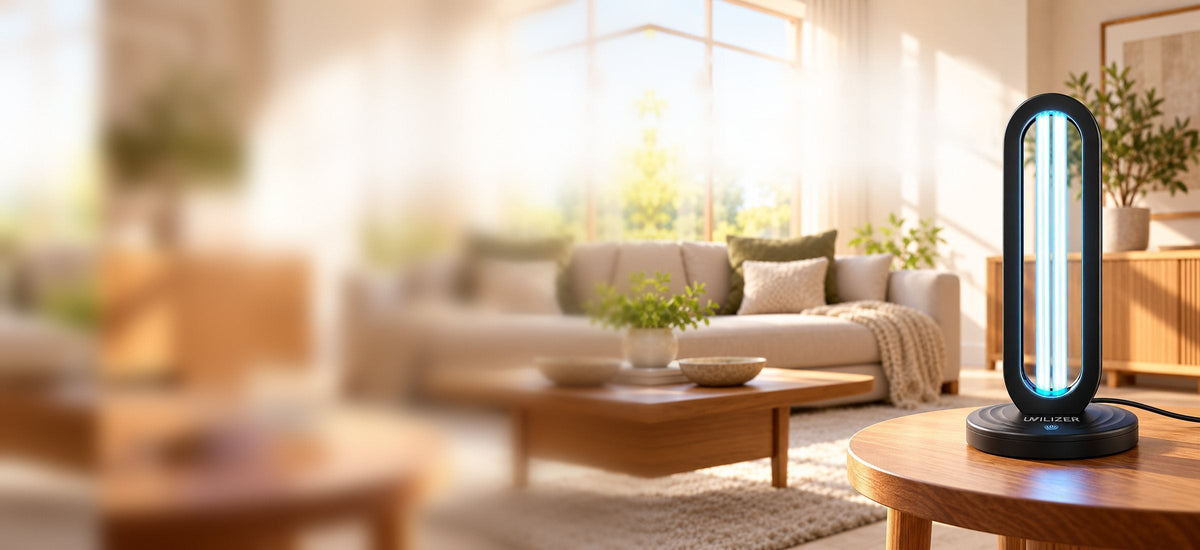
- Place it in the middle. Set the UVILIZER Tower near the center of the room on a stable surface, so its 360° light reaches as much of the space as possible.
- Pick the right cycle and step out. Use 15 minutes for small spaces like bathrooms and closets, 30 minutes for bedrooms and offices, and 60 minutes for living rooms up to 550 sq ft. Take people, pets and plants with you and close the door.
- Air it out. When the Tower shuts off, open a window or door and wait 30–60 minutes, until the ozone smell fades, before going back in.
For most homes, once or twice a week per room is a good routine, plus extra cycles in bathrooms, pet areas and rooms that hold odors.
A quick note on UV-C product claims
In the U.S., UV lights sold to kill germs are treated as "pesticidal devices" under federal law (FIFRA). These devices aren't registered or approved by the EPA, which means no UV-C product, ours included, is "EPA approved." Be wary of any brand that says otherwise, or that promises a device will prevent illness.
Frequently asked questions
How long does UV-C light take to kill germs?
It depends on the lamp's strength, the distance and the germ. A powerful lamp up close works in seconds to minutes, while treating a whole room takes longer, which is why the Tower runs 15, 30 or 60-minute cycles.
Can UV-C light go through fabric or glass?
No. UV-C is blocked by most materials, including regular glass, plastic and fabric. It treats surfaces it shines on directly. Ozone produced during a Tower cycle reaches some of the folds and corners the light can't.
Is UV-C better than sprays and wipes?
It's different. Wipes work where you wipe; UV-C treats every exposed surface in the room at once, without chemicals or residue. Most people get the best results using both: clean first, then run a UV-C cycle.
Do I need to replace the UV-C bulb?
Eventually. UV-C output slowly fades with use. The Tower's quartz bulb is rated for 5,000+ hours, and a replacement bulb swaps in easily.
UVILIZER products are pesticidal devices under U.S. EPA rules (FIFRA) and are not registered by the EPA. They are not intended to diagnose, treat, cure or prevent any disease. Always follow the product instructions.
Try it at home
Give every room a fresh start
Treats rooms up to 550 sq ft with UV-C light and ozone while you're out. Free U.S. shipping and a 30-day money-back guarantee.
Shop UVILIZER — from $99.99 UVILIZER Tower
From $99.99